STAY TUNED SPRING 2026 as we await a grant outcome. Our fingers are crossed and so are the flock’s hooves!
Yarns from the Smallest State re-imagines a regional fiber economy inspired by pre-industrial models of textile production, when livestock-in this case, sheep-were valued as fully integrated agricultural partners. Historically, sheep provided meat, dairy, fiber, fertilizer, insulation, and other essential materials within localized systems. Industrialization and globalization dismantled this model, prioritizing mechanization and standardization. Entire sheep breeds disappeared as mills demanded uniform fleece characteristics, and regional production networks eroded.
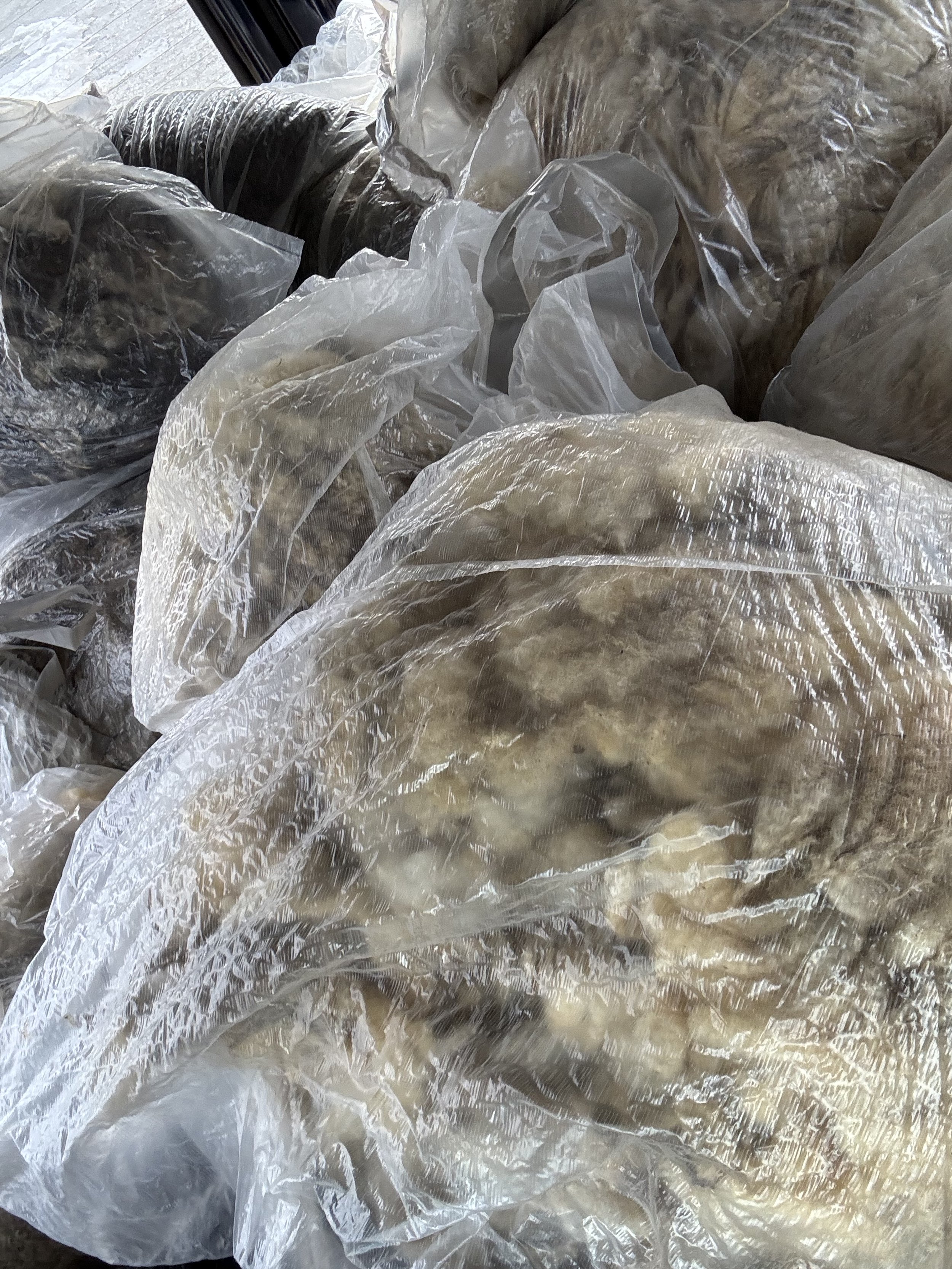
Today, the infrastructure supporting small-farm wool production in New England is fragile and fragmented. Few remaining NE mills remain and none focus solely on local fiber. Many do not accept small-batch fleeces, leaving small farms-particularly meat producers for whom wool is a secondary product-without viable markets. Regional cooperatives, often volunteer-run and limited in capacity, are frequently the only outlet. Often, these co-ops face organizational instability and suffer from poor communication and aging out, resulting in declining participation and diminished trust. Many farmers report stockpiling and even composting their raw wool with no economically feasible path to market.
The alternative- direct relationships with small mills to produce value-added goods such as yarn, blankets, or apparel-requires significant upfront investment, specialized knowledge, and marketing capacity. Processing costs are high, often $70-80 p lb for yarn (as example), making wholesale distribution economically unworkable. Farms must sell direct-to-consumer to remain viable, requiring staffing, market attendance, and e-commerce infrastructure. Production timelines are long, mills are often fully booked, and several regional mills have recently closed or face succession uncertainty. Rising operating costs and aging ownership further threaten this limited infrastructure.
In short, the regional fiber system is unstable and economically inaccessible for many small farms. Yet the potential remains significant. Wool is a renewable, biodegradable fiber with expanding consumer interest in traceable, climate-conscious textiles. The opportunity lies in sharing in the rebuilding of regional capacity through intentional, data-driven collaboration. We seek to assess the true scale of this opportunity and test whether targeted, small-scale interventions within the local fibershed can stabilize and strengthen the system. The project will gather economic and production data from farmers, mills, and fiber artists; analyze infrastructure gaps; and collaboratively design pilot strategies to address critical bottlenecks. Potential interventions may include new aggregation models, shared marketing platforms, distributed processing partnerships, or cooperative ownership structures.
Rather than presuming a single solution, this initiative proposes a structured pathway for research, experimentation, and participant-designed innovation. By grounding strategy in real economic data and lived producer experience, we aim to determine whether a resilient, regionally based fiber model is achievable in our area-and, if so, how to build it sustainably.
The time to act is now. Without intervention, small-farm fiber production will continue to decline. With informed collaboration, it may instead become a cornerstone of regenerative regional agriculture.
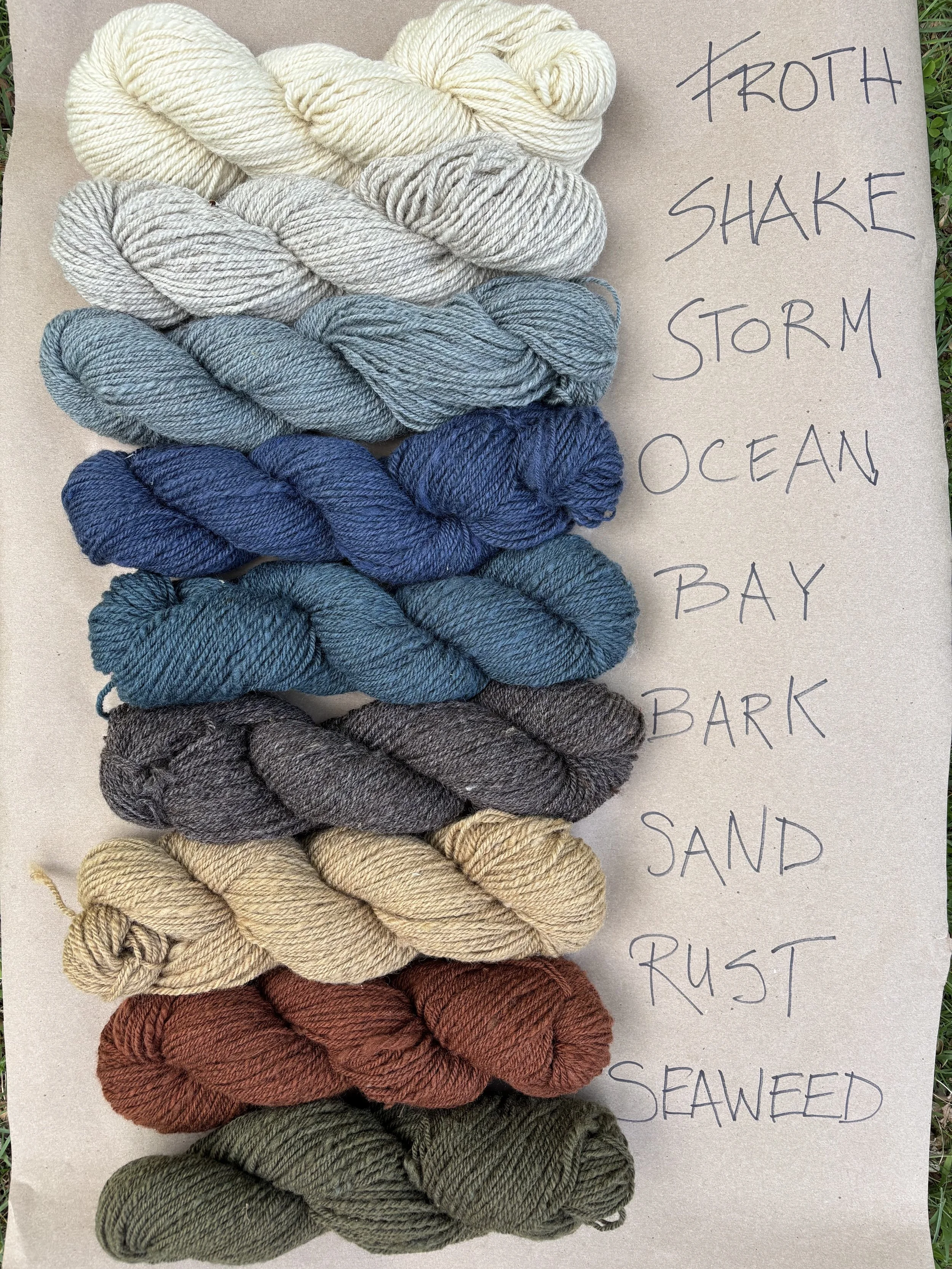
In 2025, Farmer Drake’s research and personal interest in Rhode Island’s invisible wool market led her to invest her own funds in developing a line of knitting yarns for a local farmer. Drake saw this project as a 'proof of concept' undertaking and hoped it would make a case for greater funding to support broader impact for the fiber community (keep your fingers crossed). She interviewed a small sample of farmers about their ideas of success as it relates to new commodity opportunities. Patten then used these data to determine a test case. Using fleece from Watson Farm in Jamestown RI, she worked with her own mill to evaluate the subject farm's fleece quality and determine the best product to take to market. This partnership led to the development of an Aran weight yarn dyed to represent the farm's unique island location and historic status. In collaboration with the farmer, Patten developed a labeling protocol that would lead purchasers to the farm's website.
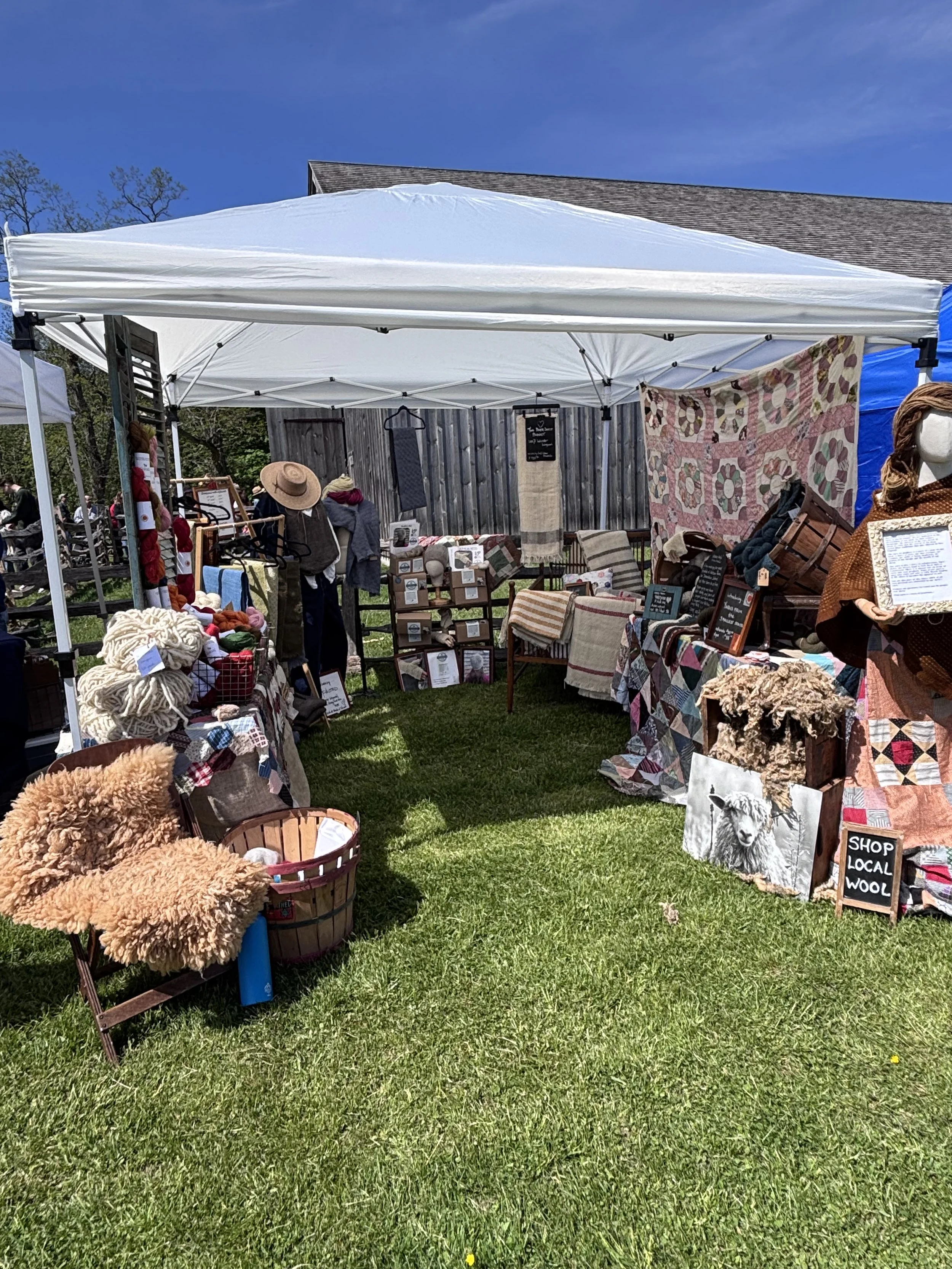
Over the last year, Patten has represented the yarn at regional fiber markets and at local gatherings-creating additional opportunity to evaluate interest and gain feedback on hyper-local fiber products.
This test case (still underway) has provided this project opportunity to:
draft census inquiry content that is farmer led, approved and useful
draft census inquiry content necessary to share with mills and producers
Identify additional best practices farmers can undertake to maximize product options
Increase understanding of market opportunities for these products
Identify audience
Identify partnerships
Research successful models from other areas of the US and abroad
Perhaps most important to this 'proof of concept' undertaking was the intimate opportunity to build trust and truly investigate a farm's economic opportunity with a farm product for which 'inputs' are already accounted for by an existing product (in this case, stock) and which current, local pathways have deemed either unworthy of consideration or economically unfeasible. STAY TUNED in Spring 2026 as we await the outcome of a grant request.